


Merchant underwriting has become one of the most sensitive pressure points in payments. For PSPs, it sits at the intersection of regulatory accountability and risk management. For merchants, it is often experienced as slower, more intrusive, and harder to predict than in the past.
What has changed is not just the number of merchants being onboarded, but how those merchants operate. Business models are more complex, payment flows are less linear, and risk rarely presents itself cleanly at the point of application. Underwriting has therefore shifted away from a purely document-led process towards an assessment of operational clarity.
In this context, transparency has taken on a different meaning. It is no longer about submitting more information, but about making it easier to understand how a business actually functions once payments are live. Where operations are clear and behaviour is predictable, underwriting tends to move faster. Where they are opaque, friction increases.
This shift is shaping how PSP underwriting works in 2026, and why transparent operations now play a central role in reducing uncertainty.
- Why PSP Underwriting Is Under Strain
- What PSPs Are Actually Assessing During Underwriting
- Transparency as a Risk-Reduction Signal, Not a Compliance Requirement
- Operational Signals That Influence Underwriting Outcomes
- How Underwriting Has Changed Between Approval and Ongoing Review
- Where Lack of Transparency Creates Underwriting Friction
- Merchant Readiness Check: Are Your Operations Underwriting-Ready?
- Conclusion
- FAQs
Why PSP Underwriting Is Under Strain
Underwriting pressure has been building for several years, but by 2026 it has become structural rather than cyclical. PSPs are onboarding a wider range of merchants than before, across more complex business models and payment flows. At the same time, the tolerance for post-onboarding failure has narrowed significantly.
Regulatory accountability has shifted upstream. PSPs are expected not only to verify who a merchant is, but to demonstrate that they understand how that merchant will behave once live. When issues emerge later; disputes, refunds, consumer complaints, or regulatory scrutiny the underwriting decision is often revisited. This has made initial approval less of a formality and more of a risk judgement with long-term consequences.
Volume also plays a role. Automation has increased the speed at which applications can be processed, but it has not removed uncertainty. In fact, higher throughput often amplifies it. When underwriting relies too heavily on static information, PSPs are left managing risk reactively after approval, which is both costly and disruptive.
The result is a more cautious underwriting environment. Decisions take longer not because PSPs want friction, but because the cost of getting them wrong has increased. Under strain, underwriting naturally looks for signals that reduce uncertainty early. Operational transparency has become one of those signals, not as a compliance requirement, but as a way to make risk legible before it materialises.
What PSPs Are Actually Assessing During Underwriting
From the outside, underwriting can look like a checklist exercise. Documents are requested, forms are completed, and information is reviewed against predefined criteria. In practice, those artefacts are only part of the picture. What PSPs are trying to assess is not just eligibility, but whether the risk profile of a merchant can be understood and monitored once payments are live.
This is where underwriting has moved beyond static inputs. Legal structure, ownership, and licensing still matter, but they do not explain how a business will behave day to day. PSPs increasingly look for signs of operational consistency: whether transaction flows make sense, whether revenue logic is coherent, and whether customer-facing processes align with what is being presented during onboarding.
Uncertainty is what slows underwriting down. When payment flows are hard to follow, when customer journeys are unclear, or when key operational details shift depending on context, risk teams are forced to make assumptions. Each assumption increases the likelihood of tighter controls being applied later, such as enhanced monitoring, reserves, or restrictions.
In practical terms, underwriting tends to focus on a small number of core risk dimensions:
Predictability of transaction flows and how funds move through the business
Consistency between stated business activity and observed behaviour
Clarity of customer interactions, including refunds and dispute handling
Stability of the operating model over time, not just at onboarding
Underwriting, in this context, is less about passing a test and more about reducing unknowns. The more legible a merchant’s operations are, the easier it is for a PSP to form a confident view of how risk is likely to present over time. Transparency does not remove risk, but it allows that risk to be assessed deliberately rather than inferred.
Transparency as a Risk-Reduction Signal, Not a Compliance Requirement
Transparency is often discussed in underwriting as though it were a compliance obligation: something merchants provide so that PSPs can tick the right boxes and move on. In practice, transparency serves a different purpose. It functions as a signal that reduces uncertainty in how a business will behave once payments are live.
From a risk perspective, opacity is expensive. When key aspects of a merchant’s operation are unclear, underwriting teams are forced to fill in the gaps with assumptions. Those assumptions do not disappear after approval. They tend to resurface later as heightened monitoring, conservative limits, or protective controls designed to contain unknown risk.
Operational transparency changes that dynamic. When payment flows can be understood end to end, when customer journeys are coherent, and when revenue logic aligns with observed behaviour, underwriting becomes less about defending against worst-case scenarios and more about forming a realistic view of exposure. Decisions still involve risk, but that risk is visible rather than inferred.
It is important to distinguish transparency from disclosure. Disclosure is about providing information when asked. Transparency is about making the operation legible without constant explanation. One reduces workload; the other reduces uncertainty. PSPs value the latter because it lowers the likelihood of surprises after onboarding.
In 2026, this distinction matters more than ever. As underwriting becomes increasingly continuous rather than event-based, transparent operations act as a stabilising factor. They allow PSPs to make faster, more confident decisions not because rules are relaxed, but because risk is easier to understand and manage over time.
Operational Signals That Influence Underwriting Outcomes
Underwriting decisions are shaped less by isolated facts and more by the signals that emerge from how a merchant operates. These signals help PSPs understand whether risk is likely to remain predictable once payments are live. They are not pass–fail criteria, but indicators that reduce the need for assumptions.
Transaction and Flow Visibility
Clear transaction flows make risk legible. When it is easy to see how funds move through the business from customer payment to settlement and onward underwriting teams can form a coherent view of exposure. Confusing or fragmented flows, by contrast, slow decisions because they make it harder to anticipate where issues might surface later.
Customer and Refund Behaviour
Post-transaction behaviour matters as much as initial acceptance. Consistent refund handling, clear customer communication, and predictable dispute patterns all signal operational control. When these elements are opaque or inconsistent, underwriting teams tend to assume higher downstream risk, even if headline metrics appear acceptable.
Business Model Clarity
Uncertainty around how revenue is generated or how services are delivered introduces friction. Underwriting progresses more smoothly when the commercial logic of the business aligns with observed payment activity. Misalignment forces risk teams to reconcile competing explanations, which prolongs review and increases caution.
Taken together, these signals allow underwriting to move from inference to understanding. Transparency does not guarantee approval, but it reduces ambiguity. In a risk environment where surprises are costly, that reduction in ambiguity is often what allows decisions to be made with confidence rather than delay.
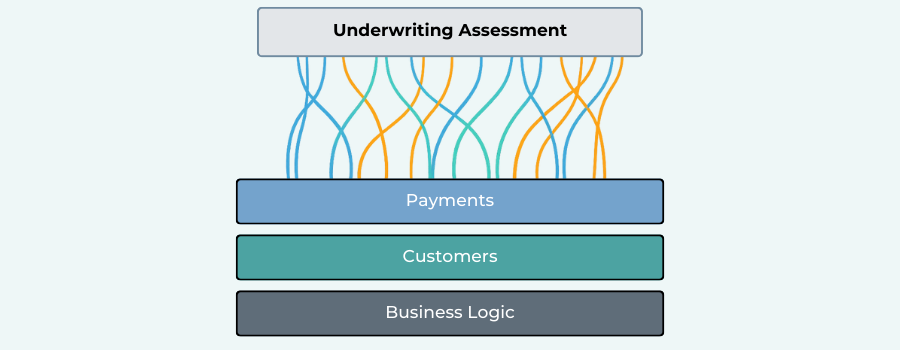
How Underwriting Has Changed Between Approval and Ongoing Review
Underwriting is no longer confined to a single decision point. In 2026, approval marks the beginning of a relationship rather than the end of an assessment. PSPs increasingly view underwriting as a continuous process, shaped by how a merchant’s operations behave over time rather than by what is declared at onboarding.
This shift reflects how risk actually emerges. Many of the issues that matter most dispute escalation, refund pressure, customer complaints, or regulatory attention surface only once real transaction data is available. An initial approval based on limited information cannot capture these dynamics fully. As a result, underwriting has extended into ongoing review, with early operational signals carrying more weight than static declarations.
Transparency plays a critical role in this transition. When operations are clear from the outset, ongoing review tends to be lighter and more predictable. Behaviour aligns with expectations, and changes can be understood in context. Where transparency is lacking, review becomes more intrusive. Controls are added not because something has gone wrong, but because uncertainty persists.
This evolution has changed the nature of underwriting outcomes. Approval no longer guarantees stability, and rejection is no longer the only risk. The real distinction lies in how much confidence a PSP has in its ability to interpret a merchant’s behaviour after onboarding. Transparent operations reduce the need for corrective action later, which is why they increasingly influence both initial decisions and how accounts are managed over time.
Where Lack of Transparency Creates Underwriting Friction
When transparency is missing, underwriting friction tends to appear in predictable ways. It is rarely caused by a single gap or omission. More often, it emerges from small areas of ambiguity that compound as risk teams try to form a coherent picture of how a business will behave once live.
One common source of friction is unclear payment flows. When funds move through multiple steps without a clear explanation, or when settlement paths are difficult to reconcile with the stated business model, underwriting slows as teams work to understand where risk might concentrate. The same applies when customer journeys are loosely defined. If it is hard to see how customers are charged, refunded, or supported, risk teams are left inferring behaviour rather than assessing it.
Inconsistent information creates similar delays. When operational details change depending on the context in which they are described, underwriting teams become cautious. Each inconsistency introduces doubt, and doubt leads to additional questions, reviews, or protective controls designed to compensate for uncertainty.
In practice, lack of transparency often results in a familiar set of outcomes:
- Extended underwriting timelines as risk teams seek clarification
- More conservative initial limits or reserves to offset unknown exposure
- Heavier post-approval monitoring to observe behaviour that was unclear upfront
- Greater likelihood of later remediation, even if no immediate issues arise
These measures are not punitive. They are mechanisms to manage uncertainty after the fact. From a PSP perspective, it is safer to apply controls than to proceed on assumptions that may later prove incorrect.
For merchants, this is where the cost of opacity becomes visible. Underwriting friction is rarely about compliance failures. It is about the effort required to make sense of an operation that is difficult to interpret. Transparent operations reduce that effort, which is why they play such a central role in streamlining underwriting decisions in 2026.
Merchant Readiness Check: Are Your Operations Underwriting-Ready?
By the time underwriting friction becomes visible, it is usually reflecting something structural rather than a single missing detail. PSPs are not looking for perfect operations, but for operations they can understand well enough to assess risk confidently. This distinction matters, because it explains why some merchants experience repeated questions or prolonged review even when documentation appears complete.
Readiness, in this context, is about legibility. If a PSP cannot form a clear mental model of how the business operates once payments are live, uncertainty persists and controls tend to increase. This section is not a checklist to satisfy underwriting, but a way to reflect on how operations are likely being interpreted from the outside.
A useful sense check is whether:
Payment flows can be understood end to end without repeated clarification
Customer, refund, and dispute behaviour follows a consistent and explainable pattern
The commercial model aligns cleanly with observed transaction activity
Operational behaviour remains stable rather than shifting between explanations
If these questions are difficult to answer, underwriting may still proceed, but it is more likely to do so cautiously. In most cases, ongoing friction is not caused by non-compliance, but by the effort required to interpret operations that are difficult to see clearly.
Conclusion
PSP underwriting in 2026 is driven less by documentation and more by how clearly risk can be understood. As merchant models become more complex and regulatory accountability increases, underwriting has shifted towards assessing operational clarity rather than relying solely on static information.
Transparent operations do not eliminate risk or guarantee approval. They reduce uncertainty. When payment flows, customer behaviour, and commercial logic are legible, PSPs can make decisions with fewer assumptions and less need for protective controls.
This has changed the nature of underwriting friction. Delays are rarely arbitrary; they reflect the effort required to interpret opaque operations. Merchants whose operations are easier to understand are therefore better positioned to move through underwriting with greater stability, not because they are risk-free, but because their risk is visible.
FAQs
1. Why has merchant underwriting become more demanding in recent years?
Underwriting has become more demanding because merchant business models and payment flows are more complex, while PSPs carry greater accountability for post-onboarding risk. This has shifted underwriting from a procedural check to a judgement about how risk will behave over time.
2. Does transparent merchant operation guarantee underwriting approval?
No. Transparency does not remove risk or guarantee approval. It reduces uncertainty, allowing PSPs to assess risk deliberately rather than relying on assumptions that may lead to conservative controls.
3. What do PSPs mean by “operational transparency”?
Operational transparency refers to how clearly a merchant’s payment flows, customer interactions, and commercial logic can be understood once payments are live. It is about legibility, not volume of information.
4. Why do unclear payment flows slow down underwriting decisions?
When payment flows are difficult to interpret, PSPs are forced to make assumptions about where risk might surface. Each assumption increases caution, leading to longer reviews or additional controls.
5. How does customer and refund behaviour influence underwriting?
Predictable refund handling and dispute behaviour signal operational control. Inconsistent or opaque post-transaction behaviour increases perceived downstream risk, even when transaction volumes appear healthy.
6. Why is underwriting no longer limited to the point of approval?
Many material risks only emerge after real transaction data exists. As a result, underwriting has evolved into a continuous assessment that reflects how operations behave over time, not just what is declared at onboarding.
7. What typically causes underwriting friction after approval?
Friction usually arises when operational behaviour diverges from what was understood during onboarding. This creates uncertainty, which PSPs manage through additional monitoring or restrictions.
8. Is underwriting friction always a sign of non-compliance?
No. In many cases, friction reflects difficulty interpreting how a business operates rather than a failure to meet compliance requirements.
9. Why do PSPs apply conservative controls when transparency is lacking?
Conservative controls are a way to manage unknown risk. When operations are hard to interpret, PSPs reduce exposure until behaviour becomes clearer.
10. How can merchants tell whether underwriting concerns are structural or temporary?
Structural concerns tend to recur and require ongoing explanation, whereas temporary issues resolve once clarity is established. Persistent friction often signals deeper operational opacity.
11. Does faster underwriting always indicate lower risk?
Not necessarily. Faster underwriting usually reflects clearer operations, not lower risk. Risk can still exist, but it is easier to understand and monitor.
12. Why is operational stability important beyond onboarding?
Stability allows PSPs to interpret changes in context. When operations shift frequently, risk assessment becomes harder, increasing the likelihood of ongoing review or controls.